Zorest AI
Most wellness apps fail because tracking feels like work.
Health Tech
AI
Role
Product Designer
Timeline
8 weeks
team
1 Enginners, 1 PM, me
platform
Mobile App
The Real Problem
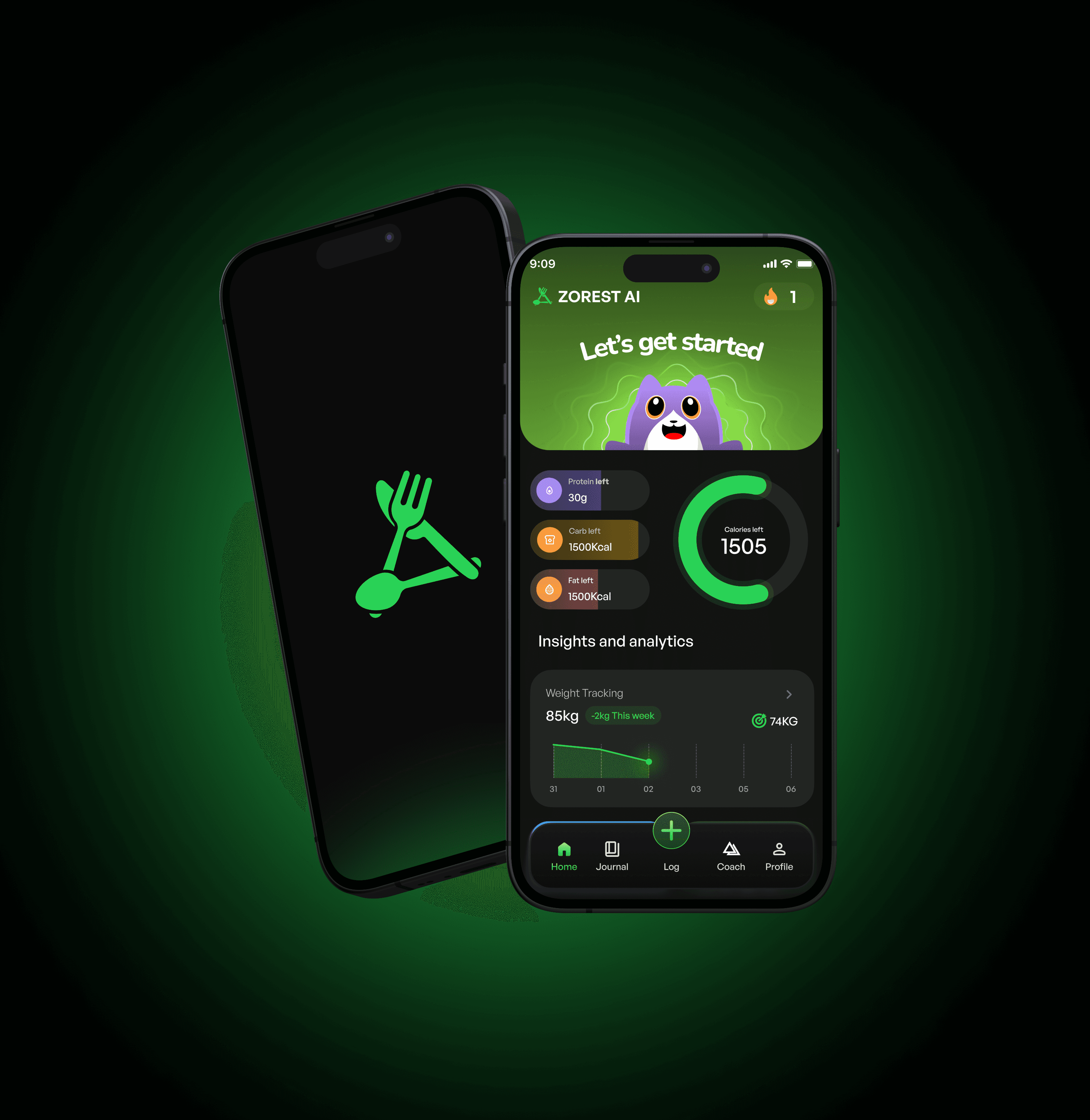
The original product worked. Users could track calories, macros, and meal progress without much friction. But like many health apps, it felt functional rather than memorable.
The experience was built around metrics, not motivation. Users opened the app, checked their numbers, maybe logged a meal, and left. There was very little emotional pull, no meaningful reward loop, and honestly, no strong reason to return tomorrow.
That became the bigger issue.
Wellness products rarely fail because users lack information. Most people already know what they should be doing. The real challenge is staying consistent when motivation naturally drops.
That changed how I approached the redesign.
This wasn’t really a UI problem. It was a behavior problem.
The goal became turning Zorest from a passive tracking utility into something that actively supports healthier habits.

Finding the Fix
The biggest shift happened when I stopped thinking about Zorest as a tracking app.
There are already plenty of products that help people count calories.
The better question became:
Why would someone actually come back tomorrow?
That completely changed the design direction.
Instead of focusing only on dashboards and tracking systems, I started thinking about emotional engagement, habit reinforcement, and reducing friction.
A few core ideas shaped the redesign.
First, the product needed to feel lighter. Tracking health already takes effort—the app shouldn’t feel like another daily task.
Second, users needed something to connect with emotionally. Numbers alone rarely create motivation, but encouragement, momentum, and visible progress often do.
Third, consistency needed stronger reinforcement. Small wins should feel noticeable instead of disappearing into background data.
And finally, AI needed to feel more like a coach than a calculator.
That combination shaped the redesign.
What Actually Happened
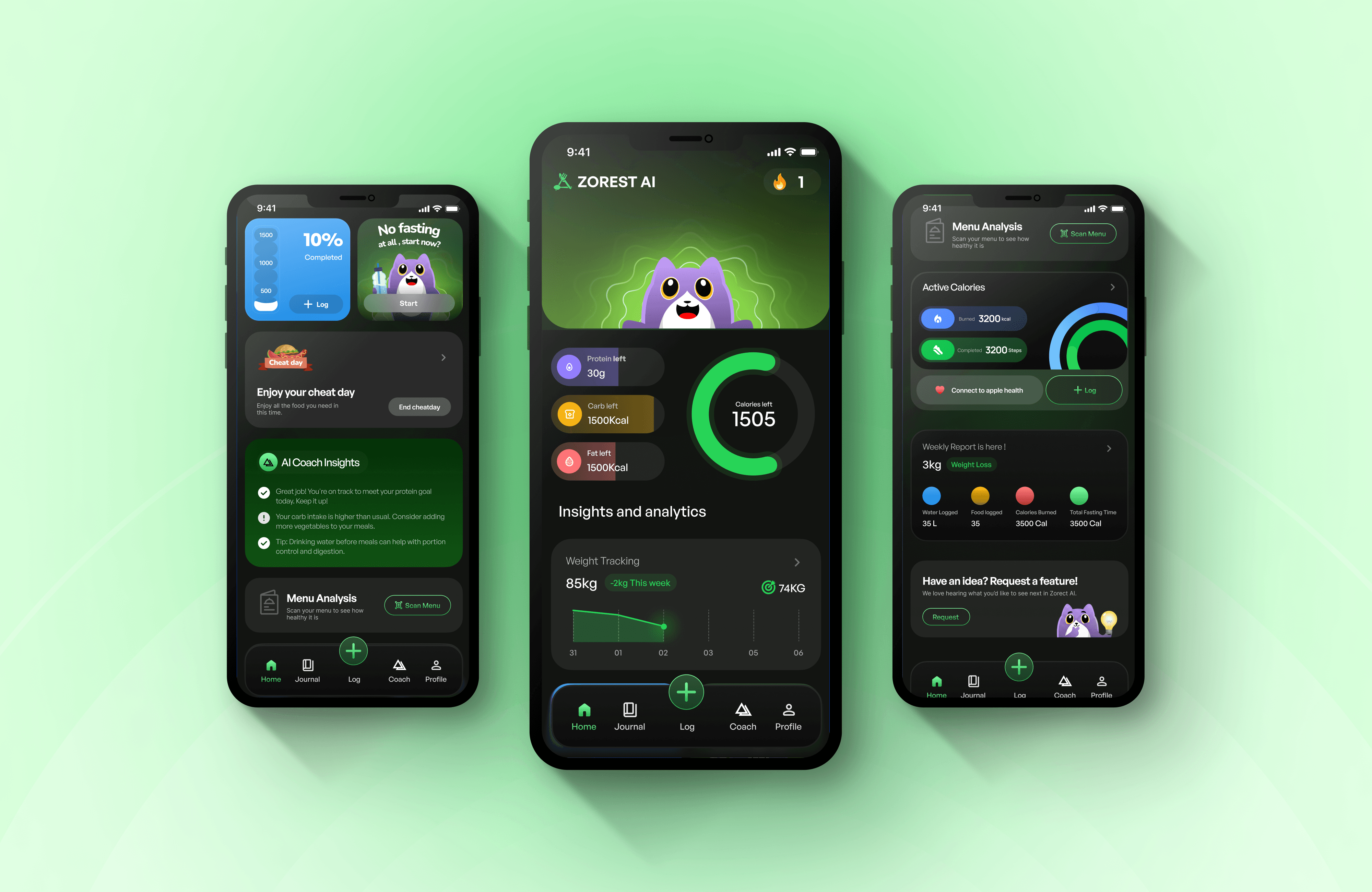
The original home screen was heavily metric-driven. Calories, macro breakdowns, progress indicators—useful information, but not a particularly engaging experience.
It felt more like a dashboard than a wellness companion.
One of the biggest changes was introducing the mascot system.
This wasn’t just a visual decoration. It became part of the product’s behavior design.
The mascot celebrates progress, encourages consistency, reacts when users go inactive, and adds emotional feedback throughout the experience. That small layer gave the product personality and made interactions feel far less transactional.
We also built a stronger gamification ecosystem around habit formation.
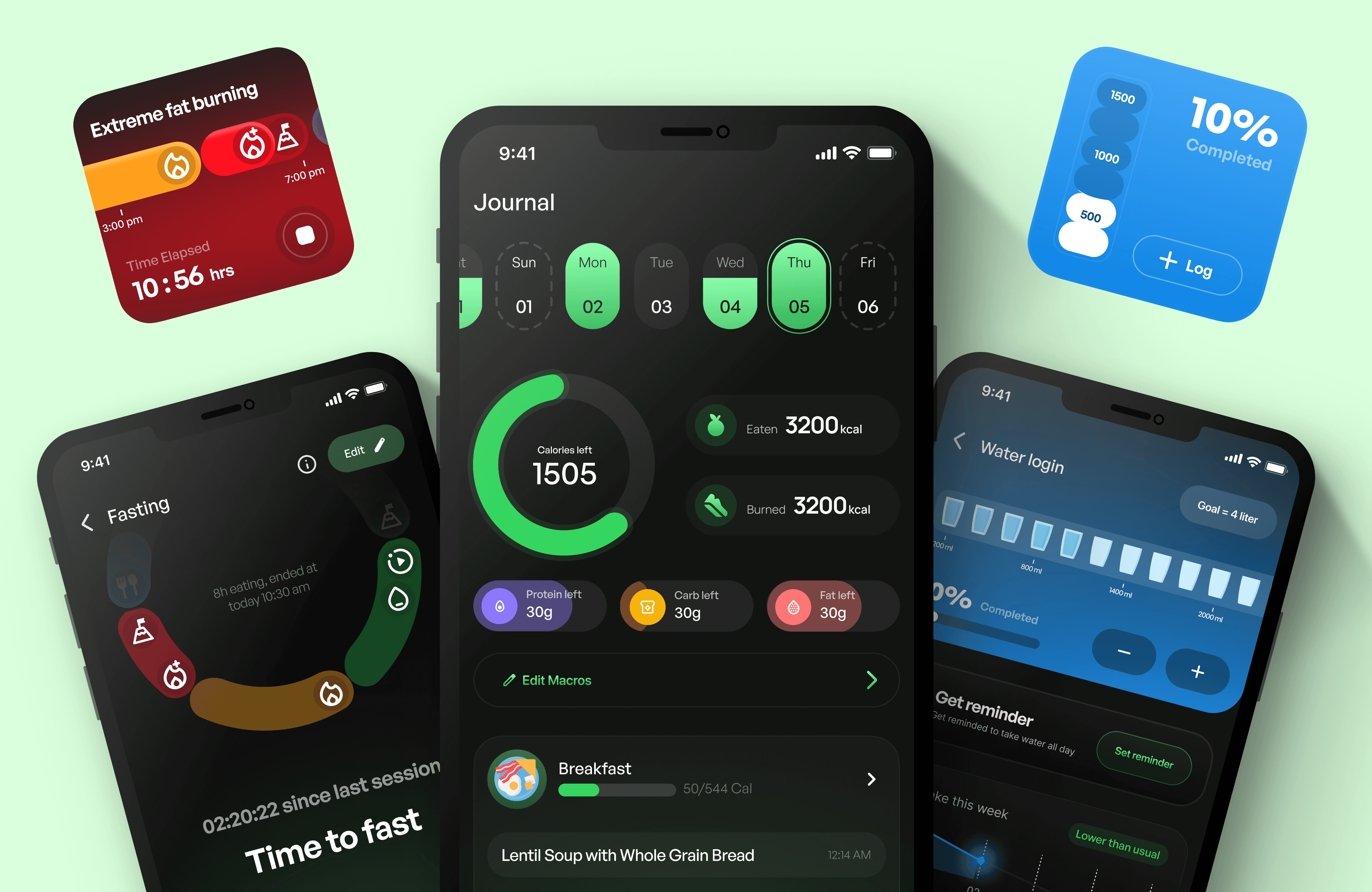
This included streak systems, milestone badges, hydration widgets, fasting experiences, coaching touchpoints, and progress-based reward loops.
Instead of static health summaries, the app became much more dynamic.
The home experience changed significantly too.
Rather than showing users only health metrics, the redesigned experience created multiple engagement moments throughout the day:
AI coach insights
hydration progress
fasting reminders
cheat-day interactions
weekly health reports
recipe recommendations
menu analysis
habit milestones
AI became much more integrated into the product experience as well. Instead of existing as a disconnected feature, it became part of the daily wellness journey through guidance, encouragement, and contextual insights.
Visually, the redesign completely changed the product identity. The darker premium theme, neon accents, and stronger character-driven design helped Zorest stand apart from the sea of generic wellness apps.
By the end, it no longer felt like another health tracker.
It felt like a wellness companion.
What Changed
The biggest transformation wasn’t visual.
It was behavioral.
Before the redesign, users mainly interacted with Zorest when they needed to log something. The product was functional, but passive.
After the redesign, the product created multiple reasons to come back throughout the day—whether through streak preservation, coach insights, progress rewards, fasting reminders, or emotional interactions with the mascot.
Expected impact:
higher daily engagement
lower drop-off from tracking fatigue
stronger habit consistency
increased interaction with coaching features
stronger emotional connection with the product
But the biggest shift was perception.
Before, Zorest felt like a health utility.
After, it felt like a product users could actually build a relationship with.
That’s a very different kind of experience.

What I Had to Work With
This wasn’t a blank-slate product.
Zorest already had working systems for meal logging, calorie tracking, health monitoring, and user progress. The challenge wasn’t building something new—it was redesigning the entire experience without losing the product’s existing utility.
Retention was also a major concern. Health apps are easy to download, but much harder to keep using. Even useful products lose users when the experience starts feeling repetitive or emotionally flat.
Gamification added another layer of complexity. Adding streaks, badges, or mascots sounds simple, but if those mechanics feel forced or childish, users lose interest quickly. The challenge was making motivation feel meaningful rather than gimmicky.
AI also needed careful handling. In wellness products, trust matters a lot. Recommendations can’t feel random or robotic. The AI needed to feel supportive, warm, and genuinely useful.

What I'd Do Differently
I’d spend more time testing long-term motivation patterns.
Gamification works well at first, but sustainable engagement is much harder. What feels motivating in week one can become repetitive by week eight.
I’d also push personalization much further. Different users respond to very different types of motivation—some want encouragement, some want accountability, and some prefer challenge.
That emotional adaptability could make the product significantly stronger.
I’d also refine how AI recommendations explain themselves. In wellness experiences, trust grows when users understand why something is being suggested.
What I Learned
Behavior design matters more than I expected.
Users rarely abandon wellness products because features are missing. More often, they leave because the experience stops fitting naturally into their daily lives.
Emotional engagement turned out to be one of the strongest retention levers in this redesign. What started as a gamification idea became a much deeper product mechanic because it gave the experience personality.
I also learned that gamification only works when it reinforces real habits. Badges and streaks alone don’t create behavior change—but meaningful progress can.
And finally, AI in wellness needs warmth.
People don’t want to feel judged by a machine.
They want guidance that feels human, supportive, and genuinely helpful.
